Showing posts with label Guest Post. Show all posts
Thursday, November 20, 2014

5 #Subtips from Debut Author and Editor Kate Brauning

Hey Secret Lifers-- Alex here. My CP Kate Brauning just released her debut, HOW WE FALL, a week ago, and she's here sharing some of her secrets with us about writing and revising today. Her book's fantastic, she's one of the coolest people I know, and she has an amazingly content Siberian husky named Charles (who I got to pet when I visited!! ahh! such fluff).

Take it away, Kate!


With my debut novel How We Fall just having been released, I’ve been asked to share some of the things I’ve learned in the past few years as an editor and author.

1)      Keep writing. When you’re querying, when you’re on submission, keep writing. Having another project to put your energy into is a great way to help balance the nerves, waiting, and stress that goes along with publishing. Plus, if you decide to shelve that manuscript, you’ll be well on your way to having a new one completed, and if you do land an agent/book deal, having another project nearly ready is great.

2)      Trust your ability to rewrite. Holding too tightly to sentences and paragraphs and ideas in my manuscripts held me back more than almost anything else. Someone once told me that if I can write one good line, I can scrap it and write another, and if I can have one good idea, I can come up with a second. Doing what’s best for the story and the prose and not keeping myself locked in to something just because I’m proud of it is essential to being a good writer. That’s been a huge factor in reducing the stress of revisions. If you’ve done it once, you can do it again.

3)      Don’t expect your first draft to be magical. Don’t get discouraged when you’re drafting if you’re not seeing magic happen. That magical touch and those insightful moments you see in great books aren’t magic at all. They’re the result of blood and sweat. First drafts are limp and flat and awkward—that’s normal. The depth and layers come as you revise. And revise. And revise.  

4)    Focus on your own writing. When I was querying, it was sometimes a struggle to not be jealous when someone else signed with an agent. When I was on submission, it was hard to not be jealous when someone else landed a book deal. Even though I was happy for my friends, it often made me wonder if it meant I wasn’t as good because it hadn’t happened for me yet. And now that I have a book out, there are other authors’ awards, bestseller lists, and publicity and buzz I could be worrying about. But no one else’s success diminishes mine. One of the most wonderful things I’ve been realizing as I find critique partners and connect and blog with other authors, particularly in YA, is that we’re much more colleagues than competitors. Readers can pick up my book, and they can pick up someone else’s, too. Another author’s success doesn’t limit or detract from mine. What does limit my success is me looking at someone else’s plate, and wishing I had what they had, and letting my own work suffer.

5)      Think of writing and the publishing journey as pursuing any other career. Study, learn from experts, network, study more, practice, take constructive feedback, and work, work, work. Writers sometimes have the expectation that it should take maybe a year to write and revise a MS and a year to get the querying process figured out, query, and hear back. Either way, 2-3 years is about the time we expect to have an agent and be on submission if we’re any good. I don’t think that mindset is accurate or always healthy. Writing is a competitive, demanding, detail-oriented, incredibly complex career. No other career like that gets off the ground in 2-3 years. It takes more than that to become a teacher, lawyer, engineer, graphic designer, or doctor, and even then, most of them have to work their way up. You haven’t failed and you aren’t a bad writer just because your journey takes longer than someone else’s. Treat it like a long-haul career both in your expectations and your work habits, because you are the biggest factor in your career.

Ever since Jackie moved to her uncle’s sleepy farming town, she’s been flirting way too much–and with her own cousin, Marcus.

Her friendship with him has turned into something she can’t control, and he’s the reason Jackie lost track of her best friend, Ellie, who left for…no one knows where. Now Ellie has been missing for months, and the police, fearing the worst, are searching for her body. Swamped with guilt and the knowledge that acting on her love for Marcus would tear their families apart, Jackie pushes her cousin away. The plan is to fall out of love, and, just as she hoped he would, Marcus falls for the new girl in town. But something isn’t right about this stranger, and Jackie’s suspicions about the new girl’s secrets only drive the wedge deeper between Jackie and Marcus–and deepens Jackie’s despair.

Then Marcus is forced to pay the price for someone else’s lies as the mystery around Ellie’s disappearance starts to become horribly clear. Jackie has to face terrible choices. Can she leave her first love behind, and can she go on living with the fact that she failed her best friend?


Kate Brauning grew up in rural Missouri and fell in love with young adult books in college. She now works in publishing and purses her lifelong dream of telling stories she'd want to read. This is her first novel. Visit her online at www.katebrauning.com or on Twitter at @KateBrauning. 
Wednesday, April 30, 2014

Guest Post: ADVICE ON BLURBS: HOW NOT TO DO IT

Today, we have a special guest! Here's Nicole Wolverton with how NOT to request blurbs! Take it away, Nicole!

Can we get a round of applause for Nicole?!
So last weekend I was at the Rosemont College Book Festival to sign copies of my psychological thriller, THE TRAJECTORY OF DREAMS. Another writer approached me.

“How did you get Emily St. John Mandel to blurb your book?” he asked. “Do you know her?”

I shook my head. “I have no idea why she agreed.”

Probably not the answer he wanted to hear, but it’s the truth. And it’s true of all three wonderful writers who blurbed my novel. One of them had been a guest judge for Five Minute Fiction when I was organizing it, but none of them knew me or owed me a solid. So how did it happen? And what is the process for securing blurbs anyway?

In some cases, the marketing and promotions team at your publishing house may want to target certain writers, perhaps writers also published with your imprint or writers who are well-known in your genre. Often, though, you—the writer—will be responsible for soliciting your own blurbs, whether you’re being published with one of the big houses (HarperCollins, for instance) or your book is coming out with a small press (like Bitingduck Press, who published my novel). That’s clearly true if you’re opting to self-publish.

Yeah, think about that: you have to email writers you admire, most of whom you don’t know or have no connection to, in order ask them for a huge favor. That’s not mortifying or fraught with opportunities to embarrass yourself at all.

So, today, I give you the top four ways NOT to solicit blurbs:

1.      Be a jerk. Assertiveness is key when dealing with strangers from whom you want something, so definitely skip the polite request to consider your manuscript for a blurb. Simply assume each writer on your wish list has the time and inclination to read your novel, no matter how long or out of their genre it is—either attach it right to the email and give them a two-day deadline to have your blurb in hand.
2.      Be creepy. In your email, be a total fangirl. Not normal fangirl-y but the stalker type. Mention that you know where the writer lives and will be happy to stop by to read the entire manuscript aloud to them. Be sure to include a line about something you found in their garbage during your last pilgrimage to his or her house.
3.      Take it public. You should totally pressure each writer on your list to blurb your book by posting about it on your blog, on Facebook or Tumblr, or by tweeting incessantly at each person on your wish list. But the very best way to get your writers to say yes is to bug their friends and followers, asking them to convince the folks on your list to provide a blurb.
4.      Throw a hissy fit. Are the writers on your wish list playing coy? Don’t they know who you are? Bombard them with emails to let them know exactly how miserable and stingy they are. Take to your social media accounts to ream them out for not jumping at the chance to read your brilliant manuscript. Complain to anyone who will listen about how badly you’re being treated by the writing community.

Oh, and no matter what . . . never, ever say thank you. For any reason.

Now, go forth and request your blurbs!

_______________________________________________

Nicole Wolverton spends an inordinate amount of time figuring out what makes people creeped out and uncomfortable. And when she’s not scheming or writing, she can be found running (for fun, not from things), dragon boating, or cooking. Publisher’s Weekly calls Nicole’s psychological thriller, THE TRAJECTORY OF DREAMS, a “skillful […] examination of a psychotic woman’s final descent into insanity,” while The Millions describes it as “wholly original and fearlessly dark.” She is represented by Michelle Witte of Mansion Street Literary Management. Nicole writes young adult and adult horror and thrillers.

Hang out with her on Twitter: @nicolewolverton
or on Facebook

Visit her website: www.nicolewolverton.com
Wednesday, January 15, 2014

Subjectivity Sucks: A Guest Post by Sarah Blair

Subjectivity sucks. It just does. It’s a fickle mistress. One that every writer must be, er… subjected to if they want to put their shiny darlings out on display for the world to read. Wouldn’t it be great if we could write a book with characters we love, an engaging plot, and words that speak directly to the core of every single reader’s soul? It’d be like the writer version of the One Ring. One book to rule them all, and I would keep it in my pocketses and call it my Precioussss.


Unfortunately, pleasing ALL THE READERS is a thing that doesn’t exist. People are unique. Readers have different interests and experiences that they bring to the pages. It affects their interpretation of what they read. No writer can control that. It’s out of our reach. 

However, sitting here and telling you that is a very different thing than believing it for myself. I can type the words until my fingers fall off, but that doesn’t mean it won’t sting when that rejection shows up in my inbox. We writers pour everything into our manuscripts. We put off time with our loved ones, let the dishes pile up, and the DVR fill to the brim with unwatched shows, all in the name of making our book the very best it can be. Obviously EVERYONE should enjoy it, right? Because if someone doesn’t, it’s like they’re saying, “Your best isn’t good enough for me.”

Except that’s NOT what they’re saying. It may very well feel like it, but it isn’t. Not even close.

I’ve seen both sides of Internet writing contests. I’ve been a contestant as well as a slush reader. As a contestant, when you don’t get chosen, it’s hard to deal with. It’s even worse when you read the tweets or comments and see that ugly word SUBJECTIVITY pop up over and over. It’s difficult to believe that the slush readers, or mentors, or agents, or editors you’re submitting to might like your words just fine, but they aren’t grabbed by them.


As a slush reader, you’re wading through these wonderful words and there are SO MANY GREAT ENTRIES it truly is torture to try to choose only one. To make matters worse, there may be an entry that grabs you by the collar and won’t let you go. It haunts your dreams and you’re still thinking about it when you get out of bed to brush your teeth. But, maybe it’s a genre that isn’t selling. Or maybe the agents didn’t have it on their wish lists. Should you go with your gut and choose that entry even though there’s a chance no one else will love that brain eating zombie princess the way you do? Or should you choose the other incredible gnome erotica because erotica is super hot* right now? It’s a really tough decision. And when it comes down to it, agents and editors have families to feed, just like writers do. Sometimes taking that chance might be slightly too risky for them.

Unfortunately, subjectivity is an ugly monster that you can’t conquer, no matter how hard you try. Having trouble with grammar? Go grab Strunk & White or get some quick and dirty tips from Grammar Girl. Can't seem to pin down showing vs telling? Get a handy dandy Critique Partner to call you out on it. Your ms is 10k too long for your genre? Grab a chainsaw and hack those words to bits. 


These are all things you have control over. Subjectivity? Not so much. It’s that elusive ethereal thing that no one can quite put their finger on. 

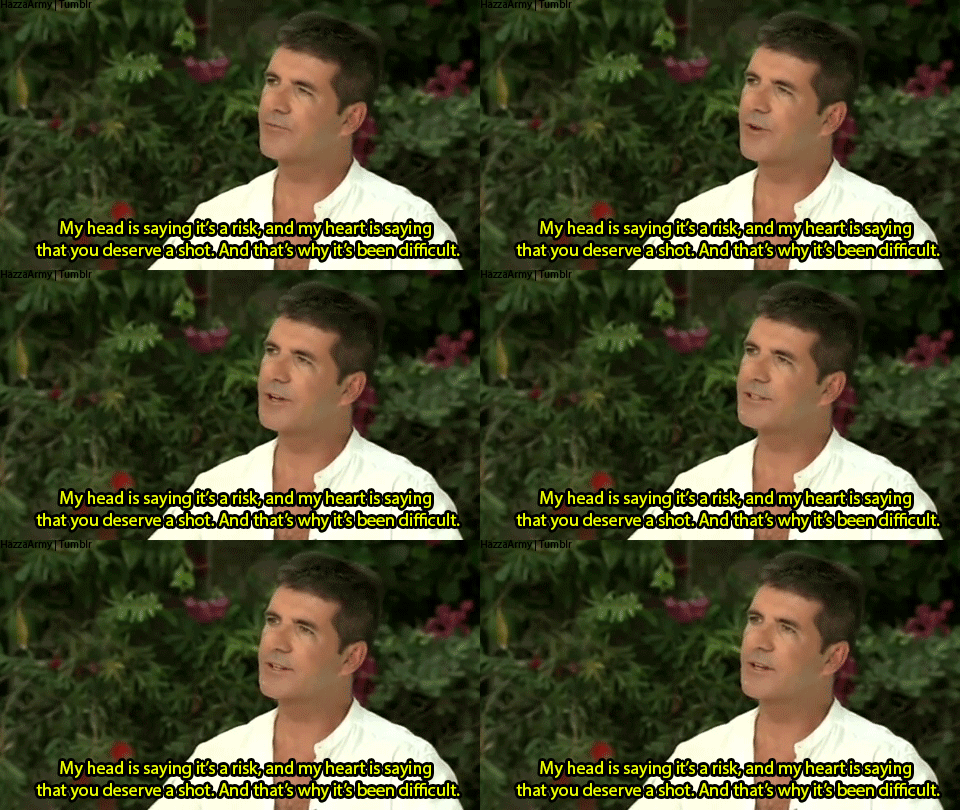
Simon Cowell probably can't define what it is that gives some singers the X-Factor--that special spark that takes them from being another member of a church choir, to overnight superstar. He simply knows it when he sees it, and even HE doesn't nail it every single time.


Agents and editors know how to spot that X-Factor in the slush pile. Simon Cowell is just one person. The best part about the literary world is that there are TONS of agents, LOADS of editors, and ALL the readers. 

So, yeah, subjectivity may be fickle, but the pool of potential readership is deep and wide. As long as you write a book YOU want to read, and more importantly, DON'T GIVE UP, you can find someone else out there who loves what you've created as much as you do.


*I read this five times before I caught my own pun. I is clearly kan write good. #TWSS


Want more from Sarah Blair? (I don't blame you) You can find her here!
Twitter: @SarahLBlair 

Saturday, December 14, 2013

The Learning Curve: A Guest Post by Kristen Strassel

I just reached THE END of my fourth book. It’s mind-boggling to think about.  Finishing this particular manuscript also closed the door on this series.  I’m actually mourning not being able to work with these characters anymore. They became such a huge part of my writing identity, as well as who I am, to not be able to live my writing life through their story is going to be just plain strange for a while. 

A writer friend of mine just nabbed an agent. While this isn’t his first book, this is the first one that just might get published.  Now he’s waiting anxiously for revisions. We chatted a bit about it last night, and I realized that the decision to publish really changed the way I wrote.

Once you want to make your book available for the world to love as much as you do, you really do have to let go. For many of us, representation means the first set of industry eyes that will look at our manuscript. I thought my first book, the one that I was offered representation on, was perfect when I got The Call. You can laugh, I’ll wait. Several rounds of revisions later, I learned how to write subsequent manuscripts tighter and more effectively. My later books haven’t needed as many revisions because of it. 

The book I just finished was the first one I started writing with the knowledge that it would be published. It intimidated the hell out of me. As I finished it, feedback started coming in on the first two books in the series. To hear how these characters effected people, and to know what they thought of the story, was extremely humbling even with good reviews. As much as we all say we write fiction, it’s hard to keep some autobiographical elements from sneaking in. I was much more aware of the rules I broke, and the how people might react to this new chapter of the story.  My main character had a major decision to make to close out the book. Would she do the right thing, the thing many readers might hate, or would she screw it all up? Were those all the same thing? I had to let my main character do what was best for her. 


In this series, many of my parameters were set by the first book. I already started working on a new book, and it’s exciting.  This new project already has all the benefits of the things I learned while writing this last series. No book is ever perfect, but thanks to books one through four, book five starts light years ahead of where I used to be. 

Want more of Kristen? You can check out her book, BECAUSE THE NIGHT, right over here and follow her on Twitter for extra awesome! 


**HAPPY HOLIDAYS, SECRET LIFERS!**
We're going on our annual holiday break, but no worries, we'll be back with more awesome than ever on January 6th. Have a great holiday, everyone!

Friday, November 29, 2013

Guest Post by Kristen Strassel: Standing on the Sidelines During NaNoWriMo

I didn’t Nano. But I still learned something standing on the sidelines.
Hi, everyone!  I’m Kristen and I’m stepping in for Andrea for a couple of posts.  This site offers such good, real, in the trenches advice and I hope you’ll all get something out of what I have to say! I’m currently writing my third book in a series, and I’m always amazed how no three books are ever alike. Even if I wrote all three of them.
Sometime around mid-October, I could feel the anticipation and anxiety level of my writing friends rise. It was time to hunker down and get ready for Nanowrimo.
I never had any intentions of participating. I was already ankle deep into my current manuscript. I was under the impression that all Nano projects had to be started from scratch, even though I did see a few authors use it to accelerate what they were working on. Plus, I know myself. As much as I fantasize about 50,000 words in a month, that’s what it is for me. A fantasy.  I edit a lot as I write, I need time to visualize my next scene. While I have a number I like to hit each time I sit down to write, I knew all those added up over the month of November would never equal 50,000.  
For me, I knew stressing over a number would make my writing suffer. But I decided to keep track of what I did for the month anyway, just to see how I stacked up.  I found out that numbers do matter. I still wanted to keep up with the Joneses. There were days I could have pushed off writing that I sat down and cranked out a couple thousand words.  So far this month, I’ve hit about 25,000. Having a monthly goal in addition to a daily goal for me did make a difference. 
So many people woke up in the middle of the night to write, worked tirelessly on their manuscripts on their days off, and made those words happen!  That’s amazing. But watching some of the extreme things writers did to get those words reminded me of a crash diet. Sure, they’ll get 50,000 words in November, but what’s going to happen in December? That’s a tough pace to keep up forever. Like dieting, everything in moderation works for me.  I know I can commit to 1500 to 2000 words a day, minimum. Life doesn’t let me write every day, but I have to write every day life lets me. 
During Nano, you are instructed to go forward and create words. Don’t look back. I saw one author won Nano while still calling a character “Name?” That gave me a panic attack!  Before I write a manuscript with new characters, I need to draw up a character profile. When I sit down each day to write, to get into the mood, I review my last session. These are things that work for me. I’m not willing to give them up and that’s okay. We’re all different. As long as each one of us eventually types “the end,” we’re all doing it right. 

I’m so impressed with everyone who’s hitting that 50,000 word mark.  Finishing anything you set out to do is a huge accomplishment.  Even if you don’t “win,” if you love your project and got anything out of National Novel Writing Month, you still “won” as far as I’m concerned. 


Want more of Kristen? You can check out her book, BECAUSE THE NIGHT, right over here and follow her on Twitter for extra awesome! 

Wednesday, March 6, 2013

Writing Wednesdays: A Guest Post by Alessandra Thomas

This week, I've decided to do something different for Writing Wednesday. Usually The Secret Lifers post about their tips and tricks for overcoming everything from planning to revisions, but this week, I have to be honest. 

I'm sick of it.

I've talked a little bit about the revisions I've been trudging through over on my own blog, and I'd intended to do the same over here. But. I'm still in the middle of revising, it's still slowly sucking out my soul, and the last thing I want to do is talk about it. Some more. 

So today, I've invited Alessandra Thomas, the author of PICTURE PERFECT, to talk to us about how writing under a pen name saved her life. (By the way, you can add PP to your Goodreads right over here. You definitely want to do this, promise.) 

Take it away, Aless.


The business of writing can kill you.
At best, it kills you socially. You lose time with friends and family. You give up parts of your precious family and social life willingly, to be sure. You have to write. You have to do this, for you.
Staying up late and waking up early, drinking a little bit too much caffeine (okay, a lot too much) and not exercising nearly enough - yeah, it can kill you physically, too.
Those things are fine. We writers accept them like a badge of honor, even, because we know they’re part and parcel of this writing life. Dirty houses, takeout meals, unkempt hair and nails. Bring it on - we know we have to suffer for our art.
But that’s nothing compared to the way the business of writing can kill your spirit.
You think you’re prepared for rejection. You’ve armed yourself with the memory of that one time your critique partner tore your story limb from limb, and some mantra reminding yourself that all the best writers suffered rejection for months and years before they became successful.  You’re going to be okay, just like them.
The first few rejections are fine. “Subjective,” “Didn’t connect,” “Not confident I can sell it.” “Subjective,” “Keep trying,” “Subjective.”
After twenty of those, your eyelid begins to twitch and your stomach churns. How horrible *is* your book, anyway? What is it about it that people would rather lay down on the floor and die than pay money for?
“Subjective,” “Didn’t connect,” “Subjective,” “Can’t market,” “Don’t be discouraged.” But you know what? Sixty, eighty, one hundred rejections later, you’ve poured your heart and soul and every second of free time into this book, and sacrificed a whole hell of a lot, and here publishing is, telling you, “It’s fine, but ultimately, it’s worthless.”
Maybe, eventually, you get requests, maybe you get an agent, maybe you make it to acquisitions at a big publishing house, but if you don’t sell a book? Sorry. All that work means one thing and one thing only - Your book won’t be a book. All this was for nothing.
Now, that? That can kill your spirit.
I engaged in that mad race for years. I was proud of and loved what I was writing, I loved the friends I’d made along the way, and I’d definitely found some level of success in publishing... but  for all the hard work I’d done, as beaten down as it all had made me up till then, I wasn’t going to be published. I’d been in the writing community awhile, a good handful of people were familiar with me, and...I don’t know. I kind of felt like everyone was watching, waiting, to see when I would sell a book.
Or maybe I was just watching myself. Every writing plan I made or activity I did, was all about when I would sell, all about the serious seriousness of when I would finally, finally write something that could break through the gates and Be Published. What was selling today? What would be selling tomorrow? If I wrote an outline that seemed promising, how quickly could I have it written? Would anyone like it? Would it be a waste of time? Or would this finally be The One that made my career? Was my stuff any good at all, or was everyone just telling me that it was because they liked me?
Would I ever even have a career?
Would I ever see any return, readers-wise, money-wise, recognition-wise, for all my hard work?
I knew I wanted to keep working on my masterpieces, but I needed an excuse for creative abandon, a shot of confidence that I was a Good Writer, a chance to put something that I’d written free of worry about marketability, conformity to genre standards, perfection of prose, or relatability of characters, out into the world and see it succeed without being a danger to my growing writing career.
I needed to write a story that was one hundred percent what I wanted to write, and to ask readers I didn’t know whether it was any good without risking everything I’d built.
I needed a pen name.
So, I got one. I picked the name “Alessandra” because I like nicknames, and Aless sounds classy and flirty at the same time - just like the book I felt like writing. That book was in the New Adult genre - about a college girl who’d gained more weight than she felt comfortable with, and how she got her groove back.
I wrote it without stressing out about all things one usually stresses about when writing an “issue book.” I wasn’t going to try to sell this to a big publisher, or even a small one, so why would I worry worry if it fit into all the molds and blueprints they are always telling all us writers we have to stick to?
The words poured out on paper into a story that was a little funny and pretty sweet and very sexy, and guess what? It turned out pretty damn well. The plot’s not complicated or extra-hooky, but it’s the kind of thing that happens in real life, and most people will probably like hanging out with the characters.
My CPs said it was good. I got a cover and a copyeditor. I set a publication date. In the first few days after I put it up on Goodreads, PICTURE PERFECT got over 150 adds.
If something goes horribly wrong, I can pull the book down and walk away, no harm done to my other writer career, the one where I use my given name. But just that process, that whole thing about writing-and-not-caring, and the story being good anyway, and people saying, “Yes! Awesome! We want to read it!” without knowing a single thing about who I was, did wonders for me.
It let me write stress-free for just a little while, showed me people want to read my work, and who knows? I might even make a little money.  Imagine that.
That’s how my pen name saved my life. 

Readers: Have you ever considered writing under a pen name? Are you doing so now? I'd be lying if I told you I haven't been considering it myself. Tell me about your journey to publication, pen name or not, in the comments below.